
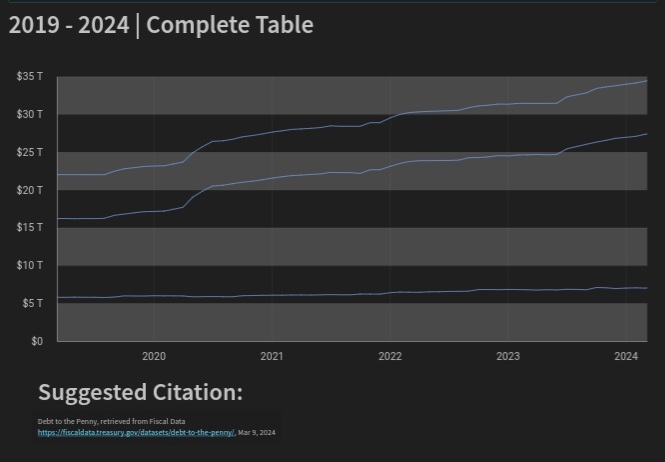
Note to reader: Given the ongoing uptrends in federal government borrowing and the resulting increases in the prices of most assets, especially stocks, gold and bitcoin, and residential real estate, I suspect that the neutral interest rate is much higher than the 2.5% theorized by Jerome Powell and the Federal Reserve. What this means is that there may be many borrowers and investors who will be disappointed when the FED funds rate is not cut as aggressively as anticipated throughout this year
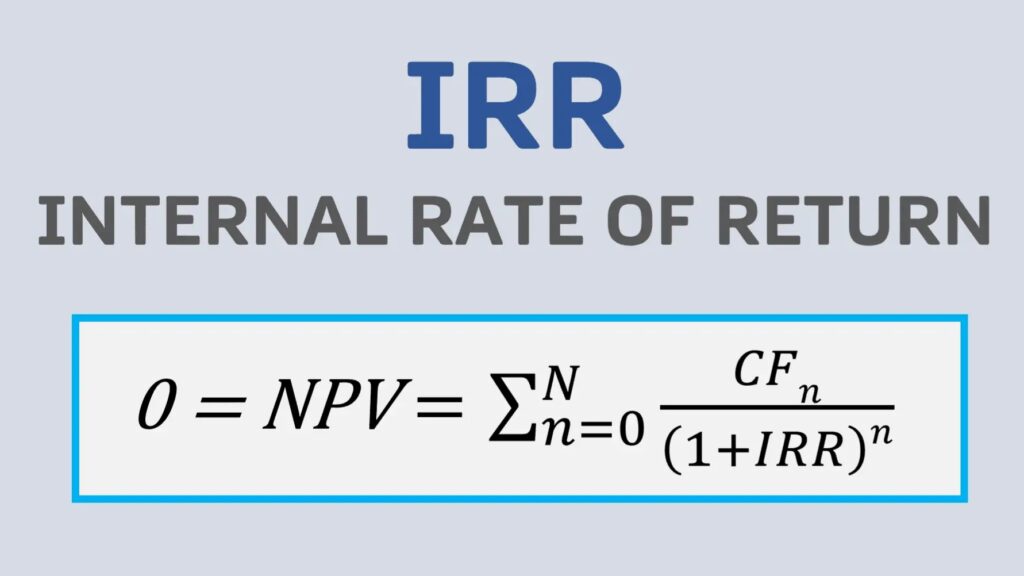
All other things being equal, this does not necessarily translate into lower asset values, since there are other dynamics at play that are suppressing corporate and real estate capitalization rates and IRRs. But pricing formulas may have to adjust accordingly to face a new normal. If the Federal Reserve cuts short-term interest rates as aggressively as many anticipate, corporate financial departments may have to place a greater emphasis on currency depreciation and be willing to pay more money upfront to initialize any capital projects. Perhaps this is why the prices of stocks and sports teams continue to levitate; buyers look at circumstances in DC and know in advance what’s already occuring.
Given the destructive fiscal policies post-covid, I theorize that asset values across the board, especially in residential real estate, could begin to accelerate much higher than many currently believe if the Fed cuts to its theorized neutral target rate of 2.5%.
Of course, high asset values and ravenous deficit spending effectively diminish the efficacy of any “tight” monetary policy, and given the amount of sovereign debt generation over the past several years, a higher neutral rate is warranted to help cap rising asset prices and the stubborn and sticky rates of price inflation.
With regard to the article below, I agree with Mr Summers as he is estimating that the neutral rate is probably at least 4%. Why? Given the aggressive federal government deficit spending trajectory, higher than anticipated interest rate levels may not play as important a future role in determining asset values. I suspect that a silent currency crisis continues to rage around the world, and that it is just not the US dollar that is a question. All fiat currencies are degrading at similar rates.
Over the past 18 months, I have borrowed about $1mm cash through several RE cash out financings at rates between 6.25% and 7.75%. Moreover, I feel comfortable paying these rates as the underlying asset values collateralizing these loans and the subsequent purchases have escalated nicely. Concomitantly, cash flows are rising faster than the government’s official inflation data. Thus, I suspect that many anxious borrowers will be disappointed when borrowing rates don’t come down as quickly as first anticipated.
Moreover, I just don’t see how long-term yields can fall to anything similar to the prior decade. The United States government is now consuming too much of the economy’s borrowing capabilities, which is the classic case of crowding out. I believe this will translate into mortgage rates and borrowing costs of at least six to seven percent for an indefinite period of time.
What I find sobering is that I believe there is a better than even chance that borrowing costs could actually keep rising from here. This is my take as a trained economist. The only way out of this situation would be if the United States government began to curtail its borrowing appetite, and I believe the time for that has since passed.
My advice to my fellow investors would be to become more comfortable borrowing at these levels as it may prove to be relatively cheap in the rear view mirror.
________________
Summers Says Fed Is ‘Wrong’ on Neutral, Warns on Rate-Cut Bets
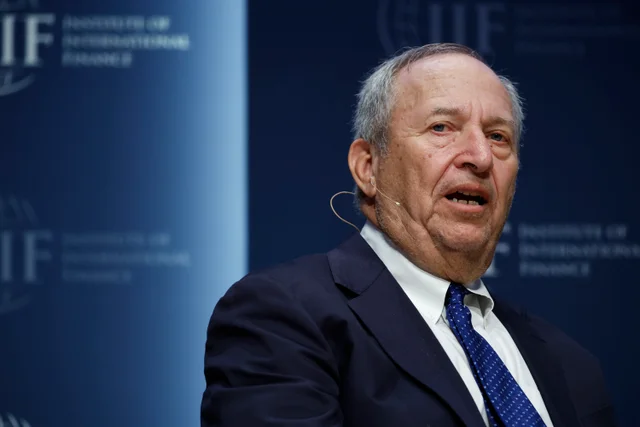
(Bloomberg) — Former Treasury Secretary Lawrence Summers said that the Federal Reserve is well off on its estimate of a neutral setting for interest rates, and that there’s an increasing chance that policymakers don’t end up lowering their benchmark this year.
“There’s something very fundamental that has happened, that I’m not sure that the Fed has fully realized,” Summers said on Bloomberg Television’s Wall Street Week with David Westin. “The neutral interest rate is way above the 2.5% that the Fed likes to talk about.”
The neutral rate is theoretically the setting for the Fed’s benchmark that would neither stoke the economy nor hold it back. If policymakers misjudge what’s neutral, they could be mistaken in how much restraint they think they’re imposing. Fed officials estimate their benchmark rate at 2.5% over the longer run. That’s 3 percentage points below the top of the current policy target range.
“When the Fed compares 5% with the 2.5% neutral rate it sees, and people say that monetary policy is substantially restrictive, that’s wrong,” said Summers, a Harvard University professor and paid contributor to Bloomberg TV. “The neutral rate is much higher than that,” he said. “Neutral rates are closer to having a 4-handle than they are to having 2-handle.”
Fed policymakers will be updating their estimate for the long-run benchmark rate at their gathering later this month. Their median projection hasn’t been 4% or higher in about a decade.
Fed Chair Jerome Powell on Thursday said that “we’re far from neutral now” with the current rate stance. “Interest rates right now are well into restrictive territory. They’re well above neutral,” he said at the Senate Banking Committee.
Summers urged Powell and his colleagues to be particularly careful about shifting toward rate cuts. Powell on Thursday said that “we’re not far” from getting the confidence about the inflation trajectory needed to begin dialing back policy restraint.
“The Fed needs to be very careful in its judgment about what would be an epochal shift from the regime we’ve had for the last several years,” Summers said. He also cautioned that financial markets may be pricing in too much in terms of rate cuts for 2024. “It’d be a real mistake for people to regard that as any kind of certainty,” he said of Fed easing this year.
Summers also said that Friday’s jobs report, which showed continued payroll gains alongside an increase in the unemployment rate to a two-year high, continued to reflect a strong economy. Job growth is still “considerably more rapid than underlying population growth,” he said.
The former Treasury chief noted that last month he had indicated about a 15% chance that the Fed doesn’t lower rates this year. On Friday he said, “If anything that 15% may have drifted slightly upwards.”
©2024 Bloomberg L.P.
I just ran across this article and thought I would post it. The ever case for income equality propped up by the entire agenda 2030 campaign.
Open link to view charts and photos.
https://www.nature.com/articles/d41586-024-00723-3?utm_source=pocket-newtab-en-us
***********************************************************************************************
Why the world cannot afford the rich
Equality is essential for sustainability. The science is clear — people in more-equal societies are more trusting and more likely to protect the environment than are those in unequal, consumer-driven ones.
As environmental, social and humanitarian crises escalate, the world can no longer afford two things: first, the costs of economic inequality; and second, the rich. Between 2020 and 2022, the world’s most affluent 1% of people captured nearly twice as much of the new global wealth created as did the other 99% of individuals put together1, and in 2019 they emitted as much carbon dioxide as the poorest two-thirds of humanity2. In the decade to 2022, the world’s billionaires more than doubled their wealth, to almost US$12 trillion.
The evidence gathered by social epidemiologists, including us, shows that large differences in income are a powerful social stressor that is increasingly rendering societies dysfunctional. For example, bigger gaps between rich and poor are accompanied by higher rates of homicide and imprisonment. They also correspond to more infant mortality, obesity, drug abuse and COVID-19 deaths, as well as higher rates of teenage pregnancy and lower levels of child well-being, social mobility and public trust3,4. The homicide rate in the United States — the most unequal Western democracy — is more than 11 times that in Norway (see go.nature.com/49fuujr). Imprisonment rates are ten times as high, and infant mortality and obesity rates twice as high.
These problems don’t just hit the poorest individuals, although the poorest are most badly affected. Even affluent people would enjoy a better quality of life if they lived in a country with a more equal distribution of wealth, similar to a Scandinavian nation. They might see improvements in their mental health and have a reduced chance of becoming victims of violence; their children might do better at school and be less likely to take dangerous drugs.
The costs of inequality are also excruciatingly high for governments. For example, the Equality Trust, a charity based in London (of which we are patrons and co-founders), estimated that the United Kingdom alone could save more than £100 billion ($126 billion) per year if it reduced its inequalities to the average of those in the five countries in the Organisation for Economic Co-operation and Development (OECD) that have the smallest income differentials — Denmark, Finland, Belgium, Norway and the Netherlands5. And that is considering just four areas: greater number of years lived in full health, better mental health, reduced homicide rates and lower imprisonment rates.
Many commentators have drawn attention to the environmental need to limit economic growth and instead prioritize sustainability and well-being6,7. Here we argue that tackling inequality is the foremost task of that transformation. Greater equality will reduce unhealthy and excess consumption, and will increase the solidarity and cohesion that are needed to make societies more adaptable in the face of climate and other emergencies.
Social anxieties drive stress
The underlying reasons for inequality having such profound and wide-ranging impacts are psychosocial. By accentuating differences in status and social class — for example, through the type of car someone drives, their clothing or where they live — inequality increases feelings of superiority and of inferiority. The view that some people are worth more than others can undermine people’s confidence and feelings of self-worth8. And, as studies of cortisol responses show, worry about how others see us is a powerful stressor9.
Rates of ‘status anxiety’ have been found to be increased in all income groups in more-unequal societies10. Chronic stress has well-documented effects on mortality — it can double death rates11. Health-related behaviours are also affected by stress. Diet, exercise and smoking all show social gradients, but people are least likely to adopt healthy lifestyles when they feel stressed.
Violence and bullying are also linked to competition for social status. Aggression is frequently triggered by disrespect, humiliation and loss of face. Bullying among schoolchildren is around six times as common in more-unequal countries12. In the United States, homicide rates were five times as high in states with higher levels of inequality as in those with a more even distribution of wealth13.
Status compels consumption
Inequality also increases consumerism. Perceived links between wealth and self-worth drive people to buy goods associated with high social status and thus enhance how they appear to others — as US economist Thorstein Veblen set out more than a century ago in his book The Theory of the Leisure Class (1899). Studies show that people who live in more-unequal societies spend more on status goods14.
Our work has shown that the amount spent on advertising as a proportion of gross domestic product is higher in countries with greater inequality. The well-publicized lifestyles of the rich promote standards and ways of living that others seek to emulate, triggering cascades of expenditure for holiday homes, swimming pools, travel, clothes and expensive cars.
Oxfam reports that, on average, each of the richest 1% of people in the world produces 100 times the emissions of the average person in the poorest half of the world’s population15. That is the scale of the injustice. As poorer countries raise their material standards, the rich will have to lower theirs.
Inequality also makes it harder to implement environmental policies. Changes are resisted if people feel that the burden is not being shared fairly. For example, in 2018, the gilets jaunes (yellow vests) protests erupted across France in response to President Emmanuel Macron’s attempt to implement an ‘eco-tax’ on fuel by adding a few percentage points to pump prices. The proposed tax was seen widely as unfair — particularly for the rural poor, for whom diesel and petrol are necessities. By 2019, the government had dropped the idea. Similarly, Brazilian truck drivers protested against rises in fuel tax in 2018, disrupting roads and supply chains.
Do unequal societies perform worse when it comes to the environment, then? Yes. For rich, developed countries for which data were available, we found a strong correlation between levels of equality and a score on an index we created of performance in five environmental areas: air pollution; recycling of waste materials; the carbon emissions of the rich; progress towards the United Nations Sustainable Development Goals; and international cooperation (UN treaties ratified and avoidance of unilateral coercive measures).
That correlation clearly holds when social and health problems are also factored in (see ‘Unequal outcomes’). To show this, we combined our environmental performance index with another that we developed previously that considers ten health and social problems: infant mortality, life expectancy, mental illness, obesity, educational attainment, teenage births, homicides, imprisonment, social mobility and trust. There’s a clear trend, with more-unequal societies having worse scores.
Other studies have also shown that more-equal societies are more cohesive, with higher levels of trust and participation in local groups16. And, compared with less-equal rich countries, another 10–20% of the populations of more-equal countries think that environmental protection should be prioritized over economic growth17. More-equal societies also perform better on the Global Peace Index (which ranks states on their levels of peacefulness), and provide more foreign aid. The UN target is for countries to spend 0.7% of their gross national income (GNI) on foreign aid; Sweden and Norway each give around 1% of their GNI, whereas the United Kingdom gives 0.5% and the United States only 0.2%.
Policymakers must act
The scientific evidence is stark that reducing inequality is a fundamental precondition for addressing the environmental, health and social crises the world is facing. It’s essential that policymakers act quickly to reverse decades of rising inequality and curb the highest incomes.
First, governments should choose progressive forms of taxation, which shift economic burdens from people with low incomes to those with high earnings, to reduce inequality and to pay for the infrastructure that the world needs to transition to carbon neutrality and sustainability. Although governments might baulk at this suggestion, there’s plenty of headroom. For example, tax rates on the highest incomes in the United States were well above 70% for about half of the twentieth century — much higher than today’s top rate of 37%. To shore up public support, governments need to make a strong case that the whole of society should contribute to funding the clean energy transition and good health.
International agreements to close tax havens and loopholes must be made. Corporate tax avoidance is estimated to cost poor countries $100 billion per year — enough to educate an extra 124 million children and prevent perhaps 8 million maternal and infant deaths annually. OECD member countries are responsible for more than two-thirds of these tax losses, according to the Tax Justice Network, an advocacy group in Bristol, UK. The OECD estimates that low- or middle-income countries lose three times as much to tax havens as they receive in foreign aid.
Although not yet tried, the merits of a consumption tax — calculated on the basis of personal income minus savings — to restrain consumption should also be considered. Unlike value-added and sales taxes, such a tax could be made very progressive. Bans on advertising tobacco, alcohol, gambling and prescription drugs are common internationally, but taxes to restrict advertising more generally would help to reduce consumption. Energy costs might also be made progressive by charging more per unit at higher levels of consumption.
Legislation and incentives will also be needed to ensure that large companies — which dominate the global economy — are run more fairly. For example, business practices such as employee ownership, representation on company boards and share ownership, as well as mutuals and cooperatives, tend to reduce the scale of income and wealth inequality. In contrast to the 200:1 ratio reported by one analyst for the top to the bottom pay rates among the 100 largest-worth companies listed on the FTSE 100 stock-market index (see go.nature.com/3p9cdbv), the Mondragon group of Spanish cooperatives has an agreed maximum ratio of 9:1. And such companies perform well in ethical and sustainability terms. The Mondragon group came 11th in Fortune magazine’s 2020 ‘Change the World’ list, which recognizes companies for implementing innovative business strategies with a positive global impact.
Reducing economic inequality is not a panacea for health, social and environmental problems, but it is central to solving them all. Greater equality confers the same benefits on a society however it is achieved. Countries that adopt multifaceted approaches will go furthest and fastest.
Nature 627, 268-270 (2024)
doi: https://doi.org/10.1038/d41586-024-00723-3
*********************************************************************************************
Of course I’m all for income equality based on merit and willingness to work and do good. For someone to be part of an organization that produces a product requires dedication and for that deserves a reward. Part of that income equality formula was destroyed long ago by the proponents of off shore manufacturing. I’m an SF Bay Area native and many areas that are absolute crime factories now actually used be factories where your car was built. Or big rig. Or food processed. Or damn near whatever else you can think of.
But what this article seems to be hinting at is Robin Hood politics. Take from the rich and give to the poor. While the act of giving is a good virtue that never goes out of style; forcing companies to do that will only lead to more cheating. Also note how well stated that the top end gained so much wealth during the covid years but didn’t really say covid. The world was struggling en masse – except of course those who were consolidating income generating assets. Mr. Stone is once again on target.
It is interesting that stock prices have still kept up except for tiny down days. While interest rates may be higher, they are not high enough to suppress asset prices. Asset prices will continue to levitate as long as the US government continues deficit spending and the federal reserve soaks up that debt.
What would change that picture is when the Fed stops buying the treasury debt and or the USG cuts its spending or drastically raises taxes. I do not see any of those happening. None of these moves are politically feasible. I think those up top are doing QE and racking up deficits to blow up the system in order to install a cashless central bank digital currency.
I am sorry for your personal circumstances. Please keep posting your research. I’ve been investing in SFRs and stocks for some time and everything you write makes perfect sense. I think Fed officials can’t lower rates as much as they are publicly saying, especially if the UST continues to borrow on the short term (90 days -3 years).
If the Fed begins accumulating a lot more USTs, it risks igniting asset inflation even higher and people will be crying out for a savior to save them from the cost of living crisis.
Thanks.
You’re the only one who explains what we need to do. Everyone else in the alt-media keeps us scared and running around chasing other key people. You are right. We need to think for ourselves. God bless.🙏